Latin Name: Urtica diotica
Herb Class/Action: Leaf – Nutritive, Alterative | Seed: Kidney Tonic | Root: Healthy Inflammatory Response Support
Parts Used: The whole plant: leaves, seeds, roots, stalks
Flavors: Salty, earthen, slightly bitter
Energetics: Drying and mildly warming
Traditional Benefits: Blood building, nutritive support, allergy support, respiratory support, adrenal and kidney support, nerve support, foundational support
Nature’s filled with life lessons—like the importance of setting healthy boundaries. Nettle (stinging nettle) is an herb whose stem and leaves are covered with hollow stinging hairs, teaching us to ‘handle with care.’ This herb supports us on our most foundational level so that we may give to ourselves first, instead of pouring from an empty cup.*
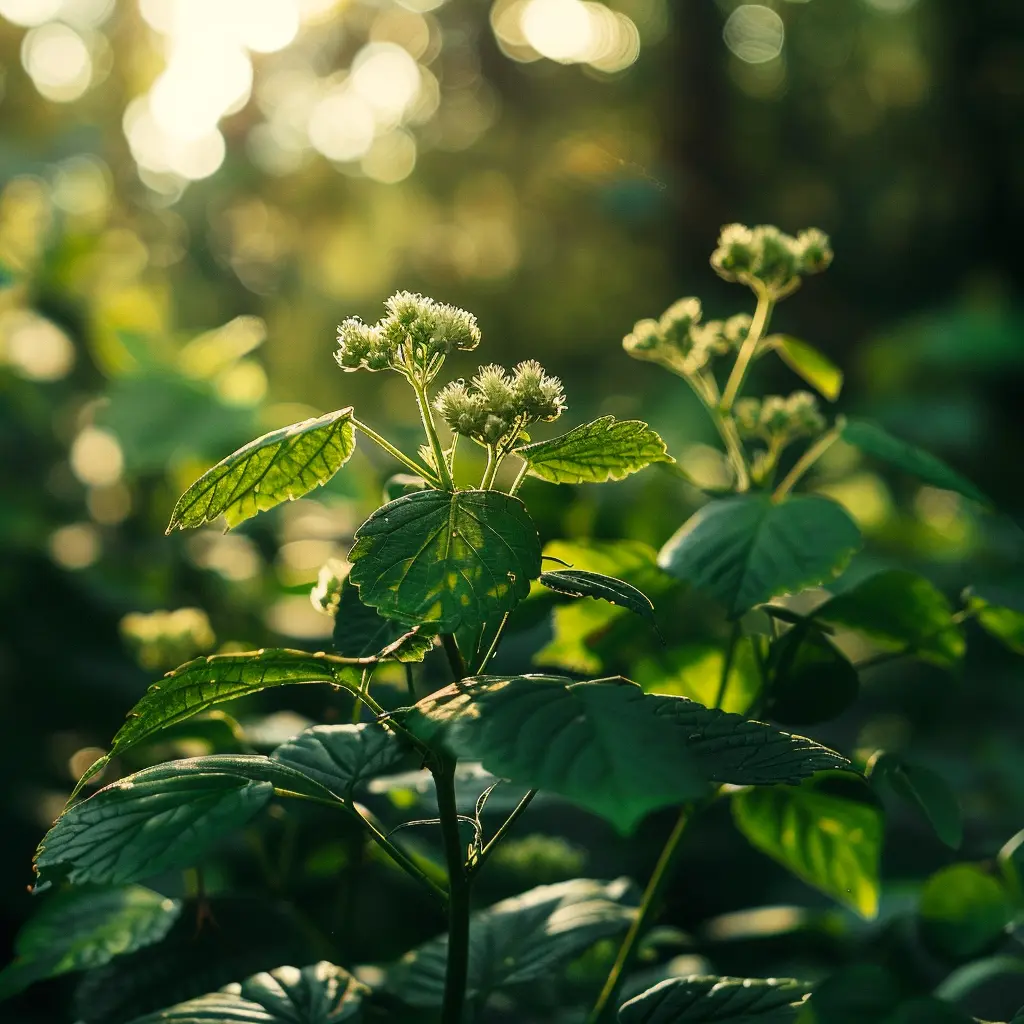
A perennial species native to Europe, Asia, Africa, and North America, Nettle is a special herb, as the entire plant can be used as a nutritive tonic. Perhaps because it’s so functional, Nettle has a built-in protection: its stem and leaves are covered in tiny stinging hairs called “trichomes”, which inject irritants through the skin when touched. Despite this unfriendly barrier, historically, we’ve found ways to utilize all parts of the plant for various traditional purposes (even the seeds).
Nettle is commonly found in wet environments, fields and meadows, or places with fertile soil. In the United States, it can be found growing wild in every state except for Hawaii—with an abundance in the Pacific Northwest. Widespread throughout northern Europe and much of Asia, nettle has been used in traditional medicine since at least the 1300s.

The stinging herb is arguably one of the most nutritious plant foods ever discovered. In its natural form, it contains large amounts of chlorophyll, fiber, flavonoids, beta-carotenes, vitamin C, some B vitamins, choline, potassium, calcium, chromium, copper, magnesium, iron, and even protein.
Its unique nutrient makeup offers numerous health benefits when consumed: seasonal wellness support, nutrition, respiratory support, adrenal support, kidney support, and nerve support. It’s also considered a blood-building herb, helping bring nourishment and life back to the mind, body, and spirit.*
“Nettles may be found by feeling for them in the darkest night” — Nicholas Culpeper