Arctium lappa
Latin Name: Arctium lappa
Herb Class/Action: Alterative, Lymphatic, Hepatic, Bitter Tonic
Parts Used: Roots, seeds
Flavors: Root: slightly bitter, sweet, earthen | Seed: bitter, pungent, sweet, earthen
Energetics: Cooling and moistening
Traditional Benefits: Immune support, skin support, lymphatic support, digestive support, microbiome support
Burdock is widely used not just as a healing herb, but as a tasty superfood, often included in soups. This herbal ally uniquely and gently supports not only the liver, but the lymphatic system too.*
We love when herbs can be used in their entirety—from seed to the tallest leaf, reaching for the sun—and such is the case for our gentle friend Burdock. Its roots, greens, and seeds are all used in both Western and Eastern herbal formulas. These include Burdock Root teas, powders, capsules, or tinctures. As a superfood, the roots are eaten around the world: sautéd, added to soups and stews, infused or brewed into teas and vinegars, or pickled (known as “Gobo” in Japanese cuisine). And in case you’re now wondering, what does Burdock root taste like? It’s earthy, sweet, slightly bitter—most similar to an artichoke heart, for comparison. In our opinion, it tends to take on the flavor of whatever you cook it with, which is why we love eating this nourishing, microbiome-feeding root in slow-cooked chicken soup.

As for its benefits and uses, Burdock Root is a gently cooling and moistening herb used to support the immune system, lymphatic system, digestive system, liver, microbiome, and skin health. It contains vitamins and minerals—including vitamins A, B, and C; calcium, magnesium, potassium, iron, and zinc—Burdock acts as an “alterative” in herb lingo, meaning it supports and helps keep our elimination channels open. In other words, Burdock keeps everything running in tip top shape, from liver health to kidney health and beyond.*
Burdock can also help strengthen the immune system and support a healthy inflammatory response within the body—aiding in general detoxification support and occasional stress support as well. These detoxification benefits inherently help support skin health —as skin issues may often have a connection to our elimination pathways.
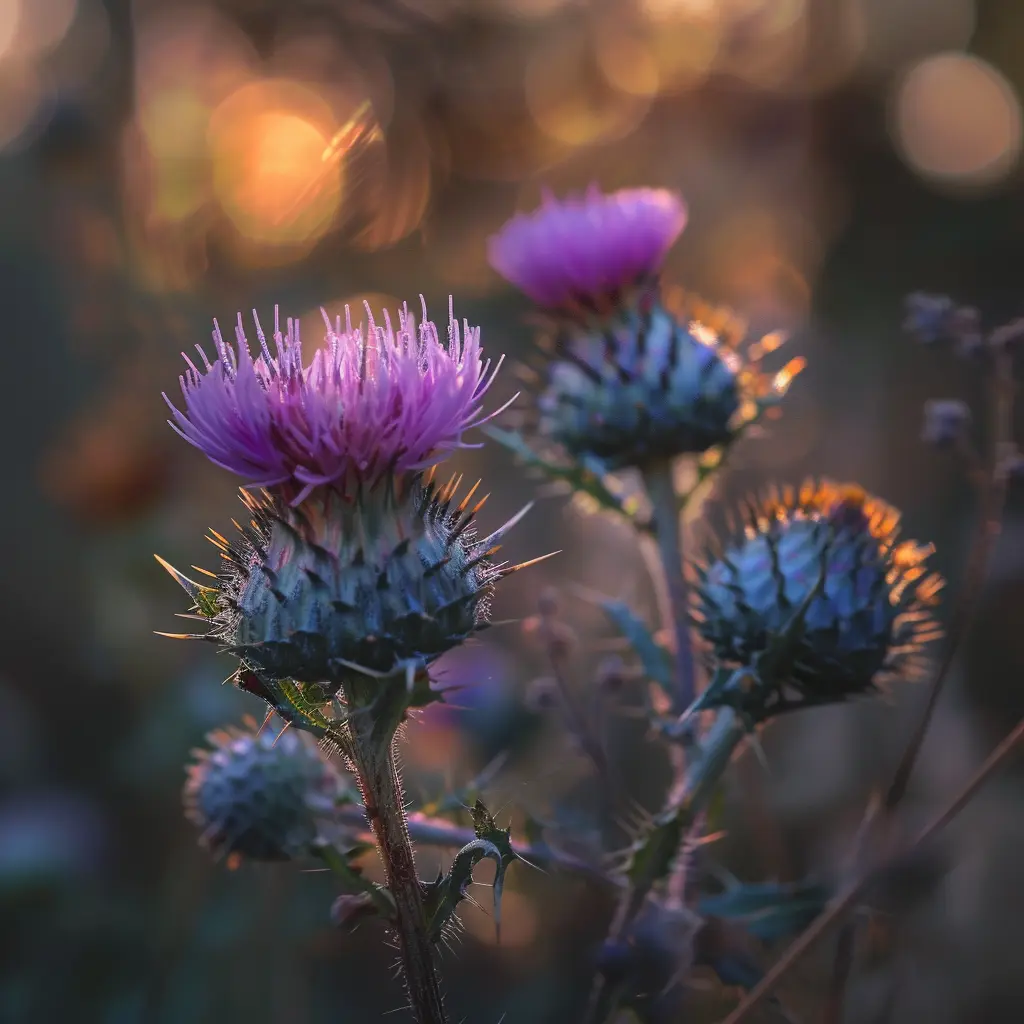
It’s said that Velcro was inspired by burdock’s sticking burrs; the construction of Velcro mimics the burr-hooks.