
Discover how a single iris reading can reveal emotional patterns, neurological tendencies, and pathways to better health and resilience
When we look into the iris, are we catching a glimpse of the soul’s true expression?
A deep-dive into...
A deep-dive into...
Iridology is a wonderful tool that helps me understand the bigger picture of your health and how your body works. In the examples below, you will see how looking at the iris not only supported my clinical decisions but also gave patients a deeper understanding of themselves, making it easier for them to choose the lifestyle changes that best support their healing journey.
Case Study: L.M. - A case of autoimmunity
Case Study: L.M. - A case of autoimmunity
This anonymized case study shows how Iridology can shine light on what’s beneath the surface and help create a care plan that truly fits the patient.
At a glance
PROFILE
Female, 43 years old; diagnosed with Hashimoto’s Thyroiditis, high-pressure corporate role, tiredness and fatigue, irregular sleep, frequent digestive discomfort
PRIMARY GOALS
Regain focus and stamina, improve energy stability, reduce bloating and digestive discomfort
APPROACH
Iris-based constitutional mapping, targeted adaptogenic and nervine herbal protocol, gentle detox support, and nervous system regulation techniques
Key Findings (from Iris Analysis)
Aim:
Looking for signs that reflect nervous overstimulation, immune dysregulation, and endocrine strain.
Neurogenic Constitution
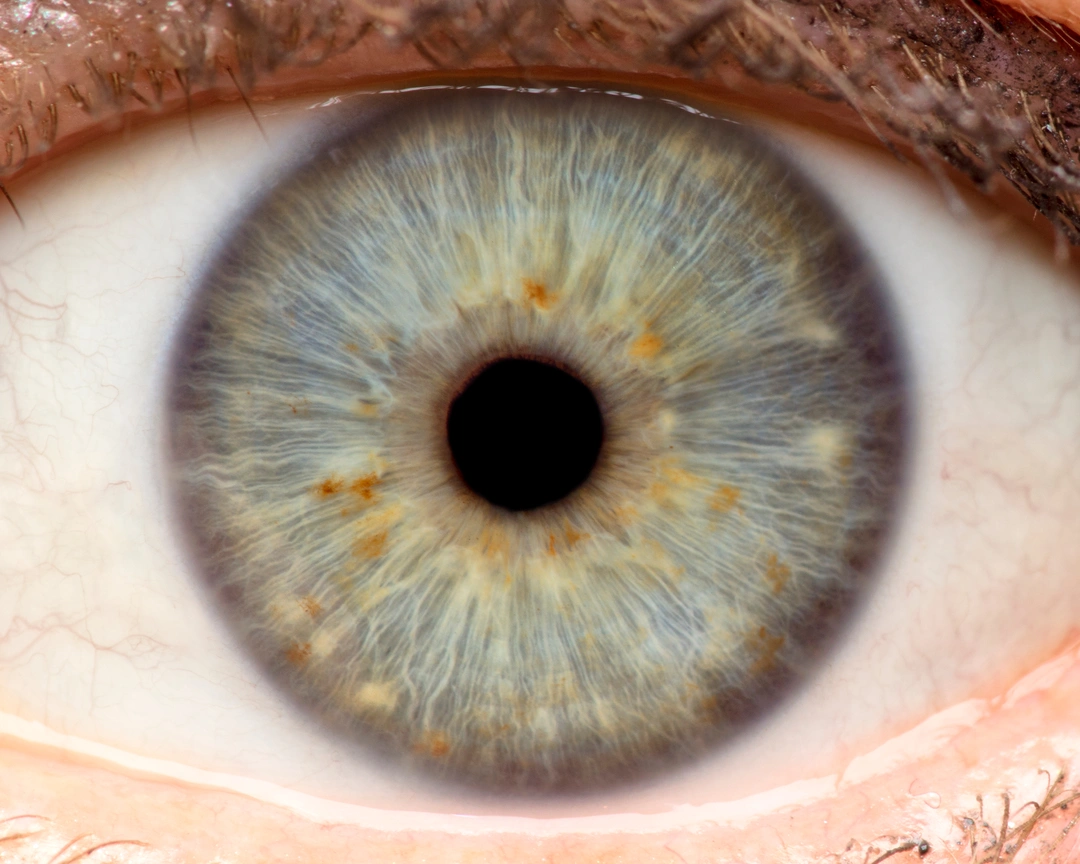
Fine radial fibers in the iris indicate a sensitive nervous system, prone to overstimulation and difficulty switching off – tendency to go into chronic sympathetic dominance (constant fight-or-flight) increaseas cortisol, which can disrupt immune balance. Chronic nervous system overstimulation can disrupt vagal tone and impair the vagus nerve’s cholinergic anti-inflammatory pathway, resulting in elevated production of pro-inflammatory cytokines such as TNF-α and IL-6 (implicated in Hashimoto’s thyroiditis).
Rarefaction in thyroid reflex zone
A rarefaction isn’t a “disease marker.” It’s more of a constitutional sign, showing where a person may be more vulnerable and need extra support. It points to an area to watch, strengthen, and protect rather than diagnose. In the case of this patient thinning of the fibre structure in the right iris at 3 o’clock shows clearly how an inherited or constitutional weakness in the thyroid manifested into an actual autoimmune imbalance.
Pigment Deposits
Brown pigments in the iris can indicate that the liver is under strain, making detoxification less efficient and adding to the body’s overall inflammatory burden. The liver is central to immune balance, as it filters everything coming from the gut and teaches the body to recognise what is harmless, like food proteins, and what is truly a threat, such as viruses or bacteria. When this delicate system is overwhelmed—by leaky gut, ongoing infections, or a buildup of toxins—the immune response may lose tolerance and mistakenly turn against the body’s own tissues.
Analysis:
A neurogenic constitution reflects a highly sensitive nervous system that is easily overstimulated. Over time, this persistent sympathetic overdrive can weaken adrenal–thyroid communication, leaving the thyroid more vulnerable to immune dysregulation and fatigue.
The rarefaction at 3 o’clock in the thyroid reflex zone suggests a genetically lower resilience of the gland. When combined with the patient’s tendency to remain in a prolonged fight-or-flight state, it points to significant strain on the nervous system. In addition, pigment deposits distributed across the iris point to an increased inflammatory burden. Altogether, these patterns show that the immune system is under pressure, the liver is clearing toxins less effectively, and this combination makes the body more reactive to outside triggers.
On closer examination, the brown psora spots indicate sluggish liver activity, which limits detoxification capacity. This promotes the buildup of toxins and hormones, with impaired estrogen clearance playing a key role in intensifying thyroid antibody activity. When combined with nervous system overstimulation and reduced thyroid vitality, these factors shape the internal terrain in which Hashimoto’s thyroiditis is most likely to develop.
Treatment Steps
To counter this, I created a herbal protocol based on these milestones:
Strengthen the nervous system with nervines and adaptogens (Avena sativa – deeply nourishing, restores a depleted nervous system, Withania somnifera – balances HPA, increase serum T4 (thyroxine) levels, supporting underactive thyroid states).
Restore gut–immune balance with a bowel cleanse and anti-inflammatories for intestinal lining (Althea officinalis, Curcuma longa, Filipendula ulmaria…).
Support liver detoxification with liver-dredging herbs (Schisandra chinensis – Dual action: hepatoprotective and adaptogenic, Rosmarinus officinalis – useful for sluggish detox with hormonal imbalances).
Directly aiding thyroid function with Fucus vesiculosus and Commiphora mukkul alongside Withania somnifera for its dual thyroid-stimulating and immune-modulating effects.
Immune-balancing herbs Curcuma longa, Boswellia Serrata, and Rehmannia Glutinosa to lower antibody activity and calm autoimmune inflammation.
Lifestyle & Somatic Practices:
Daily diaphragmatic breathing and vagal toning techniques eg. humming
Adjusted caffeine intake and restructured meal timing to support blood sugar stability to make sure body is not in fight and flight
Detox Pathway Reset:
Added gentle lymphatic movement practices and herbal teas (Calendula, Cleavers)
Supported liver function with bitters pre-meals and diet advice
Chia seeds
for right amount of foods, high fibre content.
Fermented foods
(sauerkraut, kimchi, kefir, yogurt, miso) → probiotics for gut–immune balance.
Bone broth
collagen and amino acids (glycine, glutamine) to support gut lining integrity.
Lemon, bitter greens
(arugula, chicory)
enhance liver detox pathways.
Selenium-rich foods
Brazil nuts (1–2/day), sunflower seeds, mushrooms → lowers thyroid antibodies.
Zinc sources
pumpkin seeds, oysters, lentils, grass-fed beef → needed for T4 to T3 conversion.
Chia seeds
for right amount of foods, high fibre content.
Chia seeds
for right amount of foods, high fibre content.
Supplementation
Selenium
Dose: 100–200 mcg/day (usually selenomethionine).
Lowers TPO antibodies, supports glutathione, protects thyroid from oxidative damage.
Zinc
Dose: 20–30 mg/day (zinc picolinate or citrate).
Essential for conversion of T4 → T3 and for immune modulation.
Best taken with copper balance (1–2 mg if long term).
Vitamin D3 + K2
Dose: individualized to achieve blood levels of 40–60 ng/mL.
Strong immune regulator, reduces autoimmunity.
K2 ensures calcium balance.
Magnesium
Dose: 200–400 mg/day (glycinate, malate, or citrate).
Calms nervous system, supports detoxification, balances cortisol.
Omega-3 Fatty Acids (EPA/DHA)
Dose: 1–2 g/day combined EPA + DHA.
Anti-inflammatory, lowers autoimmune cytokines.
Results (After 6 Weeks)
Focus & Energy
Sustained focus improved from 30min → 60 blocks with less afternoon fatigue
Emotional Stability
Notable reduction in anxiety and reactivity, particularly under work stress
Sleep
Faster sleep onset (average latency reduced from 45 min → 20 min) and deeper sleep cycles
Digestive Health
Bloating significantly reduced; regular bowel movements restored
Client Voice
“I finally feel like I’m not fighting my body anymore. I can focus without burning out, and my mornings feel calm instead of chaotic.”
Improvement of patient’s wellbeing after 6 week treatment
Energy (1–10)

4 → 8
Sleep Latency

45min → 20min
Mid‑day Crash

Daily → 2×/week
Caffeine Units

3-4 → 1